
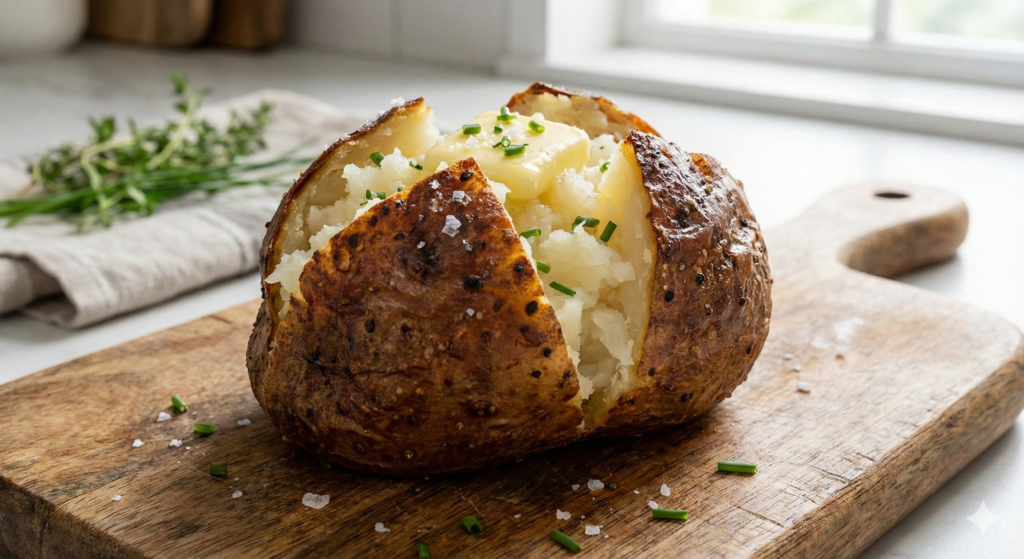
In the world of The Cooked Logic, a potato isn’t just a side dish; it’s a pressurized steam vessel awaiting precise thermal intervention. Most home cooks treat baking a potato like a waiting game, but to achieve restaurant-quality results, you must treat it like an engineering project.
By mastering the physics of cooking, we can transform a humble tuber into a masterpiece of texture. Here is the data-driven guide to the ultimate jacket potato.
1. The Foundation: Why Russet Potatoes Are Anatomically Superior
Not all potatoes are created equal. To achieve that signature “fluffy” interior, you must analyze the amylose-to-amylopectin ratio. For baking and roasting, the logic points to one clear winner: the Russet.
- The Starch Data: Russet potatoes (often labeled as Idaho potatoes) contain 20-22% starch, significantly higher than “waxy” varieties like Red Bliss or Yukon Gold.
- The Physics: High-starch potatoes possess larger starch granules. When heated to the starch gelatinization temperature, these granules swell with moisture and eventually burst. This microscopic “explosion” creates the light, crystalline structure we define as “fluffy.”
- SEO Insight: Search intent for “best potatoes for baking” often misses the why. By explaining the starch content in potatoes, you establish authority over generic recipe blogs.
2. Preparation: Engineering the “Containment Shield”
The skin of the potato is its pressure hull. If you don’t manage the internal physics, the physics will manage you—usually in the form of an oven explosion.
The Steam Release Protocol
You must poke 8–10 deep holes using a fork or skewer. As the potato’s internal moisture (which is approximately 80% water) converts to steam, pressure builds exponentially. Without these “exhaust vents,” the skin’s tensile strength will fail.
Debunking the Foil Myth
Stop wrapping potatoes in aluminum foil. Foil is a thermal conductor that traps moisture, effectively turning your “baked” potato into a “steamed” potato. This results in a wet, gummy skin and a dense, sodden interior. For the perfect crispy jacket potato, the skin must be exposed to dry heat.
Surface Chemistry & The Maillard Reaction
Rub the exterior with a high-smoke-point oil (like avocado or grapeseed oil) and coarse sea salt.
- The Oil: Acts as a heat transfer medium to facilitate the Maillard Reaction—the chemical reaction between amino acids and reducing sugars that gives browned food its distinctive flavor.
- The Salt: Uses osmosis to draw residual moisture out of the skin, ensuring the exterior becomes shattering and crisp rather than leathery.
3. The Baking Phase: Maximizing Thermodynamic Heat Transfer
To achieve a perfectly even cook, you need a convection-friendly environment.
- Rack Placement: Never bake on a flat sheet pan. Place the potatoes directly on the oven rack. This allows for 360-degree air circulation, preventing the “bottom-sog” effect caused by moisture pooling where the potato touches a solid surface.
- The “Goldilocks” Zone: Set your oven to 400°F (204°C). This temperature is high enough to trigger rapid browning and starch expansion but low enough to ensure the center reaches the target temperature before the exterior carbonizes.
Top Pick: Thermoworks Thermapen ONE (The gold standard for speed and accuracy).
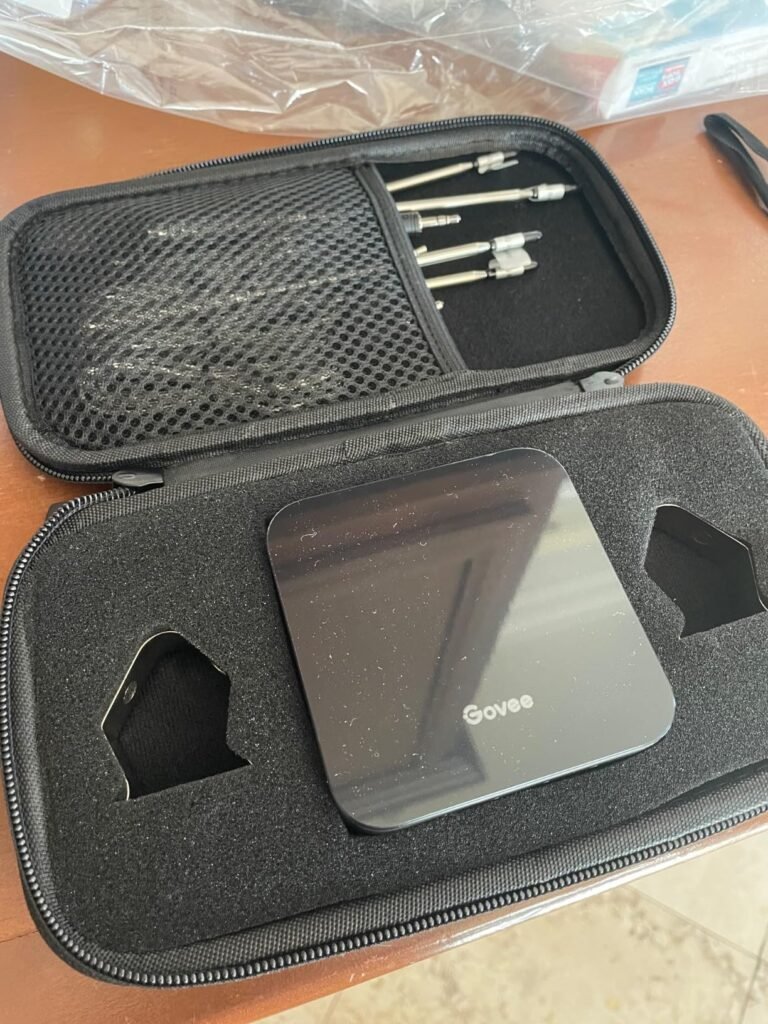
Stop guessing and start measuring. This is the exact tool I use to hit 208°F every time.

- PERFECT FIT: Uniquely designed Hard Case to fit perfectly your ThermoPro TP17 Dual Meat Thermometer
- 100% SAFE: Water Resistance & Shockproof to protect safely and securely With easy grip handle
- SUPER CONVENIENT: This case is lightweight & compact with designed mesh pocket for small Accessories
- CASE ONLY: For travel and storage (device & accessories are sold separately) Material: EVA, Color: Black
4. The Magic Number: Why 205°F is Non-Negotiable
If you aren’t using an instant-read meat thermometer, you are simply guessing. In culinary physics, temperature equals texture.
| Internal Temp | Physical State | Result |
| < 190°F (88°C) | Incomplete Gelatinization | Dense, “raw” tasting, waxy center |
| 205°F – 212°F | The Peak Phase | Starch granules burst; maximum fluffiness |
| > 212°F (100°C) | Total Dehydration | Dry, mealy, and structurally compromised |
The Cooked Logic Pro-Tip: Aim for exactly 208°F (98°C). At this precise point, the internal steam pressure has fully transformed the starch matrix into a fluffy cloud, but the moisture hasn’t yet evaporated to the point of dryness.
Don’t guess the internal state of your starch. I use the ThermoPro TP17 because it gives a readout in one second—crucial for catching that 208°F ‘sweet spot’ before dehydration begins.
5. The Finishing Touch: The Physics of “Fluffing”
The “fluff” is a fleeting state of matter. Once the potato is removed from the heat, the clock is ticking.
- The Kinetic Shock (The Drop): Some professional chefs suggest dropping the potato from about 6 inches onto a hard board. This physical shock helps “shatter” the internal starch structures that have just gelatinized, encouraging them to separate into individual flakes.
- The “X” Squeeze: Immediately cut a deep ‘X’ into the top and squeeze the ends toward the center. This allows the internal steam to escape instantly. If left un-cut, that trapped steam will condense back into liquid water as the potato cools, turning your fluffy masterpiece back into a gummy mess in under 60 seconds.
- The Lipid Barrier: Add butter or fats immediately. The fat coats the hot starch granules, preventing them from re-binding (retrogradation) as they cool. This ensures a silky, rich mouthfeel.
❓ FAQ: Logic for Curious Cooks
Why do baked potatoes burst in the oven?
Potatoes burst because internal water converts to steam, creating internal pressure that exceeds the skin’s structural integrity. Poking holes provides the necessary “pressure relief valves.”
Is it better to bake potatoes in foil or open?
For health and texture, bake them open. Foil traps steam, which prevents the skin from crisping and results in a heavy, boiled texture.
What is the best temperature for a baked potato?
400°F (204°C) is the ideal convection temperature for balancing a crispy exterior with a fully cooked, fluffy interior.